I AM NOTHING. A BEGINNING OF CULTURAL CONFUSION
AND LACK OF IDENTITY AND HOW IT IMPACTS HEALTH
AND LACK OF IDENTITY AND HOW IT IMPACTS HEALTH
I have just been to Leticia, in Colombian Amazon,
my fourth visit in four months. As Pico Iyer would say, I am amazed how
familiar I feel in Leticia, a town 500 miles from the nearest road to the other
parts of Colombia, a city most Colombians do not know. If you are interested in
the Amazon River and the cultures around it, you would certainly know about
Leticia. Also last night I finished
reading an essay by my good friend YMC in Kuala Lumpur, a narrative about her
identity as a Chinese Malaysian.
my fourth visit in four months. As Pico Iyer would say, I am amazed how
familiar I feel in Leticia, a town 500 miles from the nearest road to the other
parts of Colombia, a city most Colombians do not know. If you are interested in
the Amazon River and the cultures around it, you would certainly know about
Leticia. Also last night I finished
reading an essay by my good friend YMC in Kuala Lumpur, a narrative about her
identity as a Chinese Malaysian.

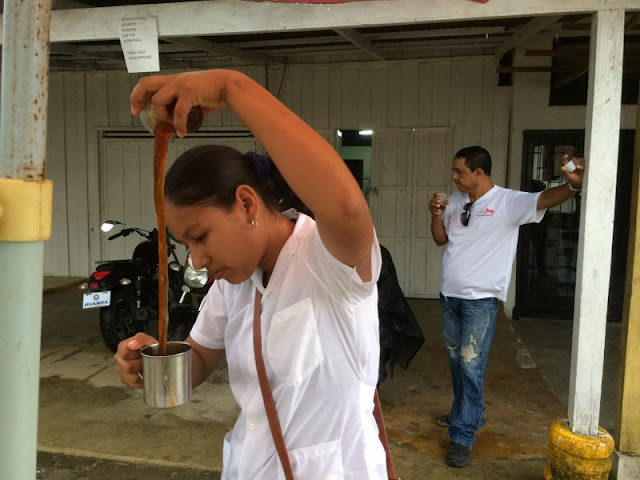
(this was the first Indian in Leticia who said to me: I dont belong to any tribe)

(On the left, an Ethnic Indian who said, I am Nothing; on the right is a Ticuna woman who still uses the Ticuna language, which has five tones and difficult to learn, at home)
The main indigenous group that inhabits the Forest
nearby is Ticuna or Maguta. Their creation story as depicted at the Maguta
museum in Benjamin Constant was explained to me by its director, Metacu, whose Portuguese
name is Nino Fernandes. The Great Spirit of the Maguta people had four sons who
came out of his knees and each one was designated special talents. One of the
brothers Yoi wanted to fish and each time he yanked and threw the line back to
the land, the fish transformed itself into People. An earlier myth relates a
younger brother Ipo grated himself with the thorns of a bush and that was
thrown into the River and transformed themselves into Fish. They are a large
tribe by Brasilin and Colombian standards and Metacu told me that in the
Solimoes region of Western Brazil there are at least 8 villages of more than
1000 Ticuna and there are large territories which belong to the Tikuna/Ticuna.
nearby is Ticuna or Maguta. Their creation story as depicted at the Maguta
museum in Benjamin Constant was explained to me by its director, Metacu, whose Portuguese
name is Nino Fernandes. The Great Spirit of the Maguta people had four sons who
came out of his knees and each one was designated special talents. One of the
brothers Yoi wanted to fish and each time he yanked and threw the line back to
the land, the fish transformed itself into People. An earlier myth relates a
younger brother Ipo grated himself with the thorns of a bush and that was
thrown into the River and transformed themselves into Fish. They are a large
tribe by Brasilin and Colombian standards and Metacu told me that in the
Solimoes region of Western Brazil there are at least 8 villages of more than
1000 Ticuna and there are large territories which belong to the Tikuna/Ticuna.


(face marking distinguish people and their respective clans)

(sequestration hut for puberty ceremonies)

This was the first Indigenous Museum in Brazil

(here with the director of the Museu, Metacu, a Ticuna from a village called Filadelfia, who speaks Ticuna, Portugese and Spanish)
Benjamin Constant and Tabatinga are in Brazil,
Leticia is in Colombia, Santa Rosa and Islandia are in Peru, but Ticuna live in
all three countries. This artificial division has had some culturally damaging
effects on Ticuna for whom these borders are artificial. For example, as
Evangelical Christianity has become popular in Brazil, Ticuna living there are
also swept along with it. Borders and the wars between Peru and Colombia as
well as Brazil with its neighbours all have contributed to the cultural decimation
of the Ticuna. But as one of their elders describes: o povo que vai vivir
sempre… We are the people who will last forever.
Leticia is in Colombia, Santa Rosa and Islandia are in Peru, but Ticuna live in
all three countries. This artificial division has had some culturally damaging
effects on Ticuna for whom these borders are artificial. For example, as
Evangelical Christianity has become popular in Brazil, Ticuna living there are
also swept along with it. Borders and the wars between Peru and Colombia as
well as Brazil with its neighbours all have contributed to the cultural decimation
of the Ticuna. But as one of their elders describes: o povo que vai vivir
sempre… We are the people who will last forever.
Visiting the museum and chatting with its
director, as well as visiting a Ticuna community which strongly clings to their
cultural values, I began thinking of the many Indians who live in Leticia.
Colombia who describes themselves as: We are nothing; we don’t belong to any
tribe!
director, as well as visiting a Ticuna community which strongly clings to their
cultural values, I began thinking of the many Indians who live in Leticia.
Colombia who describes themselves as: We are nothing; we don’t belong to any
tribe!
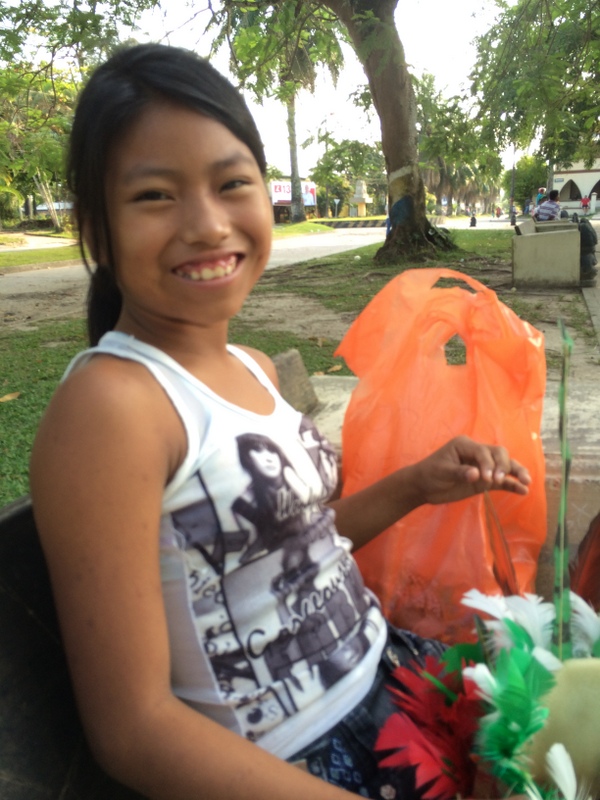
(she also said she didnt belong to any tribe)

(wearing a fake Ticuna headgear used at schools)
The grand majority of the Indians in this region
are Ticuna, with Huitoto, Yagua and Kokama in small numbers. It seems that when there is a cross border
marriage or alliance between members of various tribes, they seem to lose their
cultural identity very fast.
are Ticuna, with Huitoto, Yagua and Kokama in small numbers. It seems that when there is a cross border
marriage or alliance between members of various tribes, they seem to lose their
cultural identity very fast.
Over the centuries a system of clans had
developed and intra clan marriage was and is a taboo. Perhaps these cross
border marriages break this taboo which then castigates the person (by family
or self-castigated) to a no man’s land. They are racially Indians and gather
around other Indians, who are in similar position, and very soon a Ghetto is
formed and the original identity is lost. I am a Leticia, is an oft heard
refrain. In rejecting or being
castigated for their cultural identiy, they reject their ethnic identity, so
they end with nothing. They intermarry among themselves and soon a distinct
group of people are born. The best example are the Mestizos of Mexico, who once
upon a time had a Spanish ancestor but rejected their cultural identity and
ethnic identity and now have a distinct Mexican identity which they share with
Mexican citizens of Jewish, Arab, Japanese, Spanish ancestry. I echo my
Meskwaki teacher’s words: When you ask a white American, she said, they say
they are ¼ English, ¼ French, ¼ German and ¼ Romanian; but they don’t realize
that four ¼ do not add up to 1, but add up to zero.
developed and intra clan marriage was and is a taboo. Perhaps these cross
border marriages break this taboo which then castigates the person (by family
or self-castigated) to a no man’s land. They are racially Indians and gather
around other Indians, who are in similar position, and very soon a Ghetto is
formed and the original identity is lost. I am a Leticia, is an oft heard
refrain. In rejecting or being
castigated for their cultural identiy, they reject their ethnic identity, so
they end with nothing. They intermarry among themselves and soon a distinct
group of people are born. The best example are the Mestizos of Mexico, who once
upon a time had a Spanish ancestor but rejected their cultural identity and
ethnic identity and now have a distinct Mexican identity which they share with
Mexican citizens of Jewish, Arab, Japanese, Spanish ancestry. I echo my
Meskwaki teacher’s words: When you ask a white American, she said, they say
they are ¼ English, ¼ French, ¼ German and ¼ Romanian; but they don’t realize
that four ¼ do not add up to 1, but add up to zero.
The fact that the child belongs to the tribe and
clan of the father also may confuse the issue when they are living in a city
and not in their traditional “long houses or round houses”
clan of the father also may confuse the issue when they are living in a city
and not in their traditional “long houses or round houses”
As a Medical Anthropologist, I have a strong
interest in this negation of one’s cultural identity which leads to problems of
health. One can cling on to one’s Ethnic identity but reject the cultural
identity and this leads to disease and illness and suffering.
interest in this negation of one’s cultural identity which leads to problems of
health. One can cling on to one’s Ethnic identity but reject the cultural
identity and this leads to disease and illness and suffering.
The best example of this is the East Indians from
Indian Subcontinent (the former British India) who die on an average 15 years
earlier when they migrate to USA or Australia or UK. Because they maintain
ethnic identity ( as Indians, Pakistanis in the UK, Indians in the USA, Asians in
Australia) but are very eager to accept the immigrant country’s culture which
is usually damaging, especially when it comes to adopting the new food for the
old (good food of their native countries given up for processed food of the new
countries)
Indian Subcontinent (the former British India) who die on an average 15 years
earlier when they migrate to USA or Australia or UK. Because they maintain
ethnic identity ( as Indians, Pakistanis in the UK, Indians in the USA, Asians in
Australia) but are very eager to accept the immigrant country’s culture which
is usually damaging, especially when it comes to adopting the new food for the
old (good food of their native countries given up for processed food of the new
countries)
Mexican-Americans have a high rate of disease burden;
their socio economic status is the lowest of all immigrants, educational
achievement the lowest.
their socio economic status is the lowest of all immigrants, educational
achievement the lowest.
Octavio Paz, the Mexican poet and writer who won
the Nobel Prize in Literature and who had lived in Los Angeles in the
mid-1940s, had written the following in his introduction to his classic book,
The Labyrinth of Solitude: (about Mexican Americans)
the Nobel Prize in Literature and who had lived in Los Angeles in the
mid-1940s, had written the following in his introduction to his classic book,
The Labyrinth of Solitude: (about Mexican Americans)
They have lived in the city for many years, wearing the same clothes
and speaking the same language as the other inhabitants and they feel ashamed
of their origin, yet no one will mistake them for authentic North Americans…. What
distinguishes them. I think, is their furtive, restless air, they act like
those who are wearing disguises, who are afraid of a stranger’s look because it
would strip them and leave them stark naked.
and speaking the same language as the other inhabitants and they feel ashamed
of their origin, yet no one will mistake them for authentic North Americans…. What
distinguishes them. I think, is their furtive, restless air, they act like
those who are wearing disguises, who are afraid of a stranger’s look because it
would strip them and leave them stark naked.
I have noticed this furtive, restless air about
East Indian migrants to the USA as well who avert looks of strangers,
especially other migrants. As an aside, Octavio Paz had served as Mexican
Ambassador to India.
East Indian migrants to the USA as well who avert looks of strangers,
especially other migrants. As an aside, Octavio Paz had served as Mexican
Ambassador to India.
It is nice to conclude this lament, quoting my
favourite Chilean poet (who belonged to all), who also served as Chilean
Ambassador to many countries including Burma, Ceylon and Dutch Indonesia
favourite Chilean poet (who belonged to all), who also served as Chilean
Ambassador to many countries including Burma, Ceylon and Dutch Indonesia
A slice of his poem EXILIO
Así
es de injusta el alma sin raíces:
es de injusta el alma sin raíces:
Rechaza
la belleza que le ofrecen:
la belleza que le ofrecen:
Busca
su desdichado territorio:
su desdichado territorio:
Y
sólo allí el martirio o el sosiego.
sólo allí el martirio o el sosiego.
My translation:
A soul without roots is an injustice
It rejects the beauty that is offered to it
Looks for its own desperate country
Only there it finds martyrdom or Tranquility.
How does this impact the health of these “Cultural Nothings”?
To prove their eagerness to integrate into the majority culture they are imitating, they metabolically transform their bodies becoming fat and obese, filling up their ancestral gut metabolism with newly chemicalized food and processed powders, which create inflammation and disease.

(these are the drinks available at Islandia, Peru. Almost all of them are manufactured by Coca Cola Company!)
Once I gave a lecture on the Diseasess among
The Oppressed, The Exiled, The marginalized, The disciminated…
You can imagine the stress of belonging to any of these groups whether you are in the West or the East( Workers in the Gulf Region, Domestic workers in Malaysia and Singapore, Adivasi of India). We can do out little bit to help this helpless majority: Show respect, as the Meskwakia advised me.
Once again I will resort to Pablo
When your cultural identity is lost, you are like a boat without an anchor, it has no direction and goes wherever the wind takes you..
When you are eager to become an American or Australian, the first change which is feasible for you, before your accent become americanized, is to change the food..
As Pablo continues in his poem Exilio
El destierro es redondo:
un círculo, un anillo:
le dan vuelta tus pies, cruzas la tierra,
no es tu tierra,
te despierta la luz, y no es tu luz,
la noche llega: faltan tus estrellas,
hallas hermanos: pero no es tu sangre.
eres como un fantasma avergonzado
de no amar más que a los que tanto te aman,
y aún es tan extraño que te falten
las hostiles espinas de tu patria,
el ronco desamparo de tu pueblo,
los asuntos amargos que te esperan
y que te ladrarán desde la puerta.
un círculo, un anillo:
le dan vuelta tus pies, cruzas la tierra,
no es tu tierra,
te despierta la luz, y no es tu luz,
la noche llega: faltan tus estrellas,
hallas hermanos: pero no es tu sangre.
eres como un fantasma avergonzado
de no amar más que a los que tanto te aman,
y aún es tan extraño que te falten
las hostiles espinas de tu patria,
el ronco desamparo de tu pueblo,
los asuntos amargos que te esperan
y que te ladrarán desde la puerta.

Fishermans Ode to the Sea by Pablo Neruda
It may also apply to the Ticuna who pray to the Amazon Spirits to Abre tu caja verde y dejanos a todos en las manos tu regalo de plata; el pez de cada dia
Open your green treasure box and leave for all of us in our palms your gift A FISH FOR EACH DAY
(this is a favourite poem of a Australo French Bretonne Jew in Quiberon, Bretagne, France)
Original Blogger URL: https://medicoanthropologist.blogspot.com/2015/10/confusion-about-cultural-identity-soy.html