HISTORY OF THE FACE MASK
Tell me who your friends are, and I will tell you who you are.
Its title is an Armenian proverb; “Ըսէ՛ ով է ընկերդ, ըսեմ ով ես դու | Tell Me Who Your Friends Are, I’ll Tell You Who You Are.” In other words, you can tell a lot about people by the company they keep.
I think of this proverb in terms of enhancement of knowledge. Very early in my life I recognized that you cannot master all the knowledge, even the knowledge you are interested in, without the help of friends.
This morning, I am in Miami, I had a wonderful conversation with a friend from Wuhan, China. Our conversation began with culture and environment and soon turned on to Grotesque realism of Mikhail Bakhtin and carnavalesque (as described in the Pantegruel) and then to the anthropological significance of face mask.
I will dedicate another blog to that.
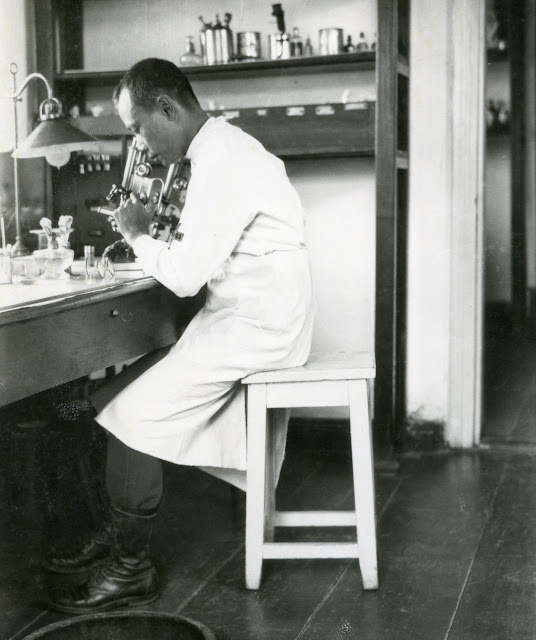
I decided to look up the history of face-mask and imagine my glee when i came upon the extraordinary life of Dr. Wu Lien Teh (Wu Liande), born in Penang in 1879. His mother was a second generation Hakka and father was an immigrant from Tinshan, China.
He won every scholarship, merit and rewards known to students and on a Queens Scholarship attended Cambridge and read Medicine.

At that time British Malaya would only allow British Nationals to hold senior posts in the Health services. Dr. Wu was very socially conscious and his anti-opium activities caught the eyes of local dons who made him leave Penang for China.
This brilliant Malay Chinese had a mind which was far beyond the scientific horizon of that time.
Here is something about him from Wikipedia:
At the plague conference, Professor Danylo Zabolotnyi and Anna Tchourilina announced that they had traced the initial cause of the outbreak to Tarbagan marmot hunters who had contracted the disease from the animals. A tarabagan became the conference mascot. However, Wu raised the question of why traditional marmot hunters had not experienced deadly epidemics before. He later published a work arguing that the traditional Mongol and Buryat hunters had established practices that kept their communities safe and blamed more recent Shandong immigrants to the area for using methods that captured more sick animals and increased risk of exposure.
There are lessons from Dr Wu for the current crisis.
He had trouble convincing others that the pneumonic plague was not due to Rats but it was airborne and that he had to introduce a simple form of the surgical mask which he had seen in England during his student days. He might have saved millions of lives because of that.
The mortality with that illness was close to 100 per cent. The plague was caused by Yersinia Pestis.
Then why are not people especially in the west listening to the Mask recommendation? Germany has made it mandatory and I think also Austria . In Israel is mandatory as well, the three top countries where the control of this virus has been exemplary.
Why this resistance to mask in the west ?
as seen above, the french doctor who arrived in China at that time laughed at the idea of wearing the mask, possibly ridiculing Dr.Wu and was dead three days later. The reluctance may have deeper reasons, worthy of anthropological examination.
Dr Wu had a cultural eye, I can see. Having born and grown in Penang among the Malays, Indians and Chinese immigrants as well as Chinese acculturated from the time of Zheng He the great Chinese naval admiral, he must have been open to the cultural diversity.
What a brilliant idea! When someone suggested that the organism had jumped from Marmot to man through hunters, Dr. Wu correctly observed and questioned why the traditional marmot hunters had been spared and the immigrant marmot hunters from Shandong who did not know the traditional methods of what types of marmots to trap. Just brilliant!
The natives usually knew how to beware of infected rodents and localities. Even when human cases arose, they remained isolated on account of the drastic measures adopted by relatives and neighbours who as a rule left the victims to their fate, hurriedly shifting camp. It is evident that this system of precautions produced excellent results as long as the nomadic habits of the natives were upheld and the sparse population did not increase with the influx of new elements. Modern civilisation through facilitating immigration into these ancients foci of infection tended to spread the disease from them, especially as the state of existing equilibrium was liable to become upset. (Wu 1936: 30)

A Buryat with his bow.

M. sibirica the marmot in question ..
Dr. Wu can be really accorded the respect of being the Father of modern Face Mask and I would claim him to the greatest physician-scientist that lived in the Peninsular Malaysia.
Traditional Chinese伍連德
Simplified Chinese伍连德

It was Dr. Wu who popularized Face Mask in China and other Asian countries which does not carry the stigma that it carries in the west. The above photo taken in HK during SARS outbreak.

Here is the blog I wrote after that:
https://medicoanthropologist.blogspot.com/2012/04/prophet-of-penang.html
The second dedication is to BS of Wuhan City, Hubei Province, a conversation that started me on this train of thought about masks.

(Buryats now, at a village celebration)
Original Blogger URL: https://medicoanthropologist.blogspot.com/2020/04/malaya-mongolia-and-mask-story-of-dr-wu.html